

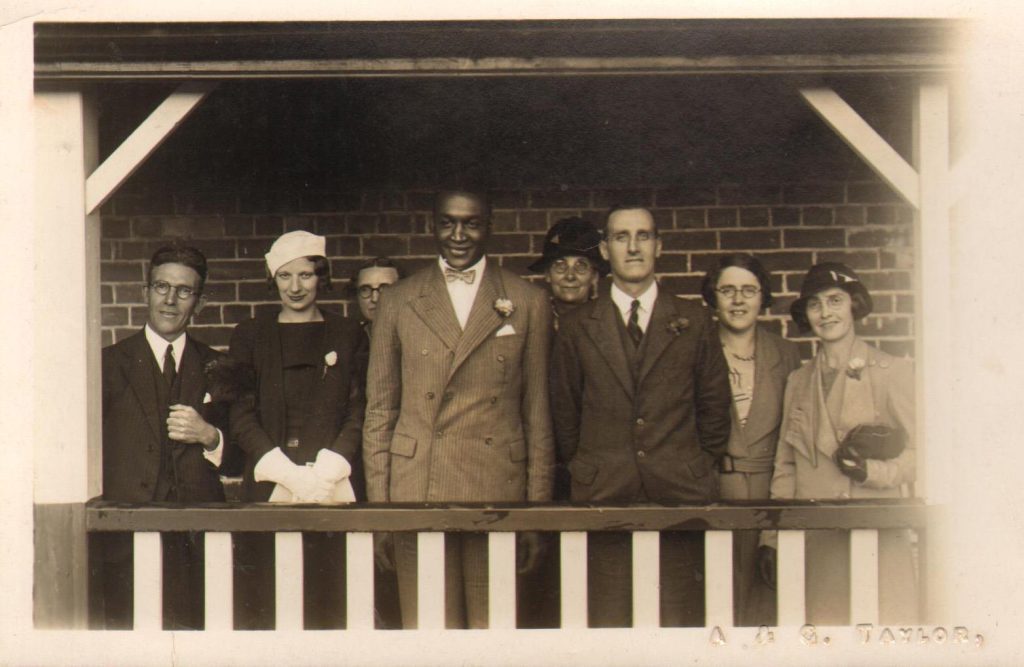
Lawrence Samuel “Larry” Gains was born on December 12th, 1900, on Sumach Street in the Cabbagetown area of Toronto. He grew up in a working-class neighborhood in Toronto’s east end. His parents were called Emanuel Gains and Alice Henderson.
Larry’s maternal grandfather, Dave Henderson, had escaped enslavement in Virginia and made his way to Canada via the Underground Railroad. This legacy of resilience and determination would shape Larry’s own journey.
In 1913, when Larry was just 12 years old, he met Jack Johnson, the first Black Heavyweight World Champion. Larry went with his father to see him, and when Johnson shook his hand and smiled, the gold in his teeth caught the light. It was a striking image that stayed with Larry for the rest of his life. He already looked up to Johnson, but that moment gave him even more inspiration to become a boxer himself.
As a young man of twenty, Larry began boxing out of Toronto’s Praestamus Athletic Club, an organisation that supported Black athletes. He quickly made a name for himself with a highly successful amateur career.

In 1922, Larry met boxing legend Sam Langford in Toronto. A year later, in 1923, he left Canada for England aboard a cattle boat, a grueling six-week voyage in harsh conditions. Dedicated to his training, he worked out whenever possible on the boat. He had turned down a spot on the 1924 Canadian Olympic Team to pursue a professional boxing career.
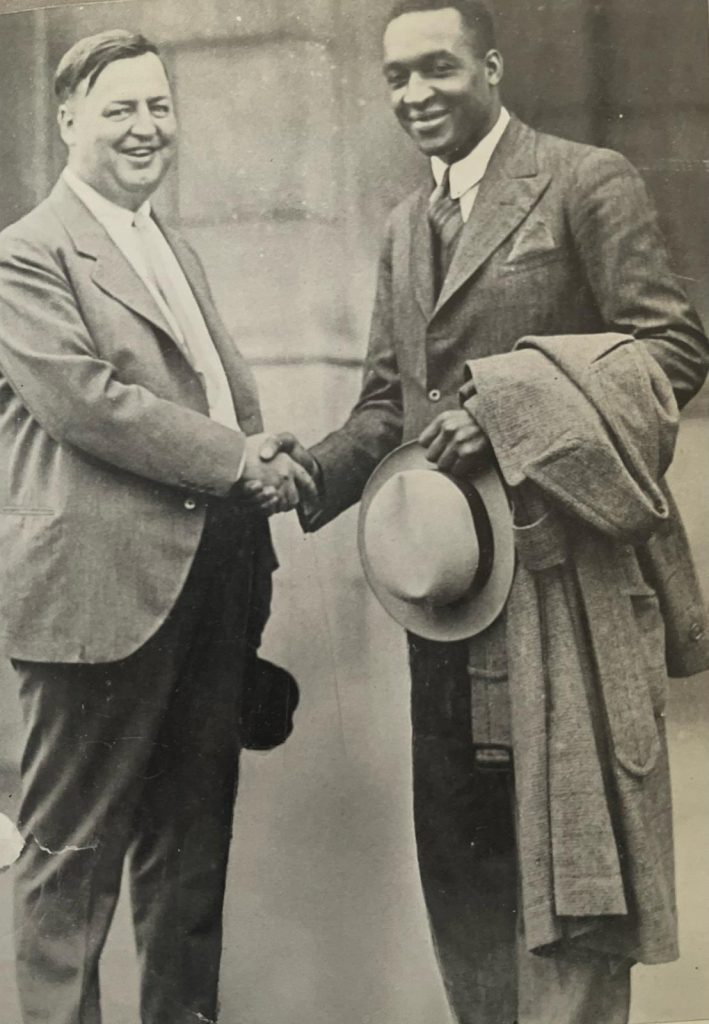
Larry Gains was one of the best boxers to appear within British rings during the inter-war years. A heavyweight, Gains became a household name in Britain during the mid-1930s as he competed in a string of high-profile contests in front of tens of thousands at a time when boxing was at the height of its popularity. Born in Canada, he had his first professional contest in the UK in 1923 and then moved to Germany, where his career took off.
A black man, Larry had the misfortune to box during a time of prejudice, and this meant that the opportunities that he clearly deserved did not come his way and he was unable to fulfil his dream of boxing for the world heavyweight title. He did manage to beat two world heavyweight champions and beat them easily.
Throughout the whole of the twentieth century Larry was the only British-based boxer to achieve this and, but for the colour bar, he may have achieved more.
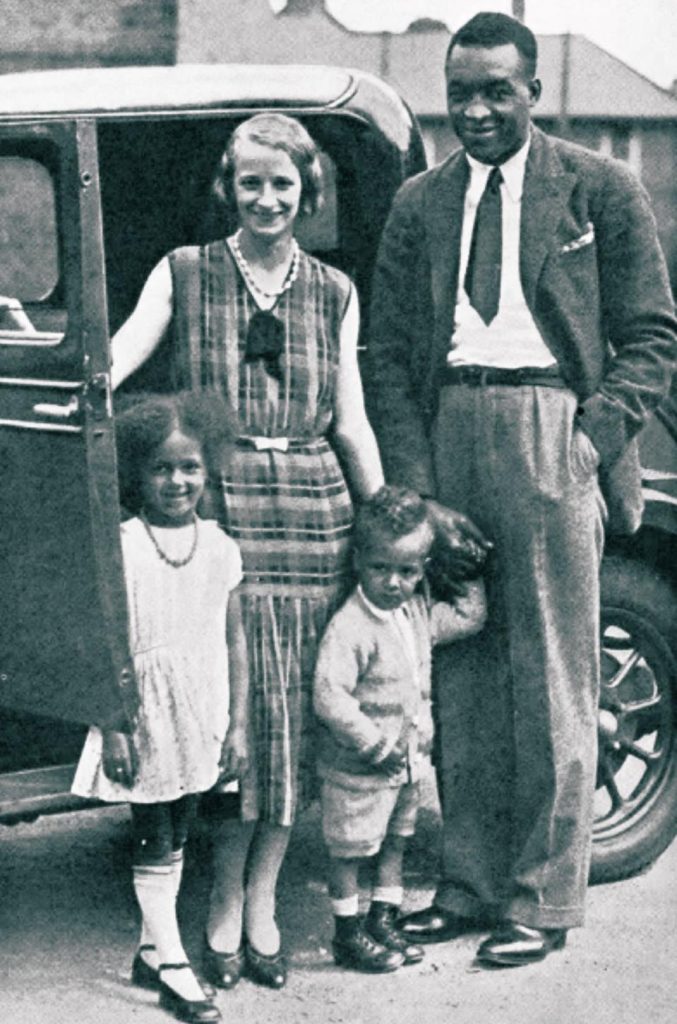
Larry did win the heavyweight championship of the British Empire in 1931 when he demolished Phil Scott in two rounds at the Leicester Tigers Rugby Ground. I have seen footage of that contest, and Gains was devastating.
Many other colonial heavyweights came to these shores during the time that Gains fought, great heavyweights from Australia, South Africa and New Zealand, and Gains was match for all of them. A noted globetrotter, a glance at his record for 1930 reveals much about how he developed his career. Larry won all eleven contests that year, boxing three times in Germany, three times in Italy and five times in Britain, twice at the famous Liverpool Stadium where neither opponent lasted beyond the third round, and twice at the Granby Halls, a vast indoor stadium in his beloved Leicester, the city where he had made his home.
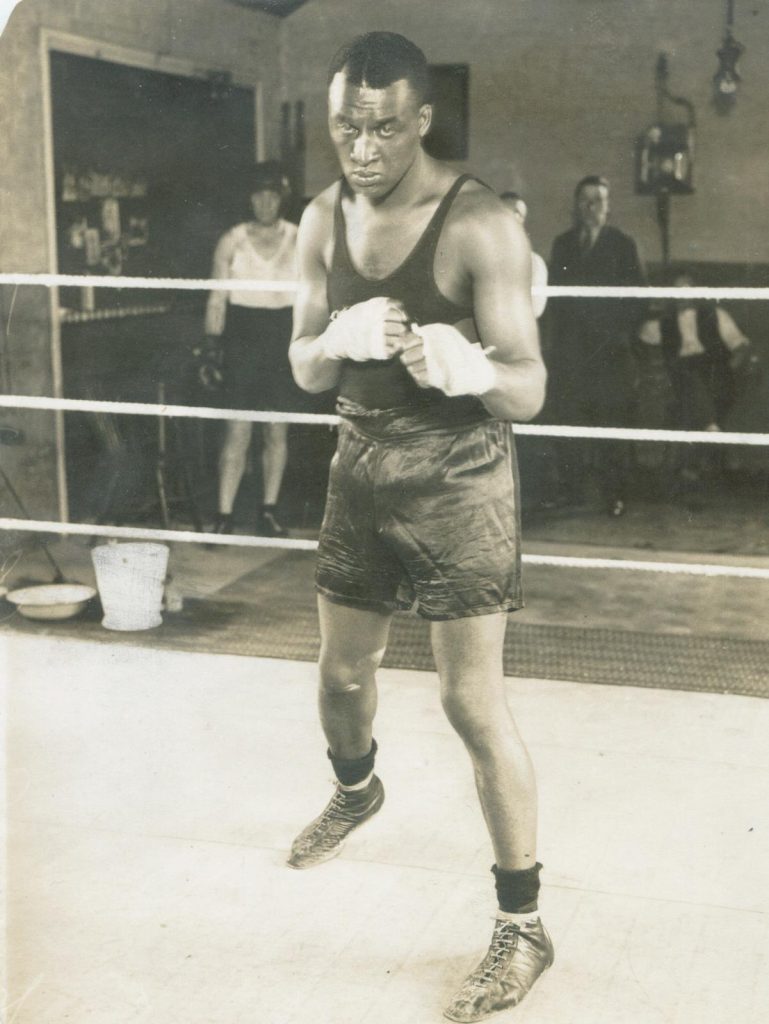
In 1925, when he was making his name in Germany, he was matched with a twenty-year-old up and comer from Brandenburg named Max Schmeling. In the second round Schmeling lay helpless against the ropes, unable to defend himself, as the referee counted him out. Five years later Schmeling became world heavyweight champion, and he is best remembered today as the first man to beat the great Joe Louis, for many the greatest heavyweight that ever lived.
In 1932 Larry was matched against the fearsome Italian, Primo Carnera, at the White City Stadium and 80,000 spectators turned up to watch Gains comprehensively outbox his formidable rival. The trade paper, Boxing News, in its report of the bout carried this headline, “Carnera receives a boxing lesson. Gains’ masterly display of attack and defence. Only one winner”. The following year, Carnera went over to the States and knocked out Jack Sharkey in six rounds to become the world heavyweight champion.
I have many pictures of Larry in my collection, and he was always immaculately turned out. Frank Butler, one of the greatest of all boxing reporters and a man who had seen them all, described Larry as an “octogenarian extraordinary, an ambassador and gentleman”. Larry was all three of those things when he died in 1983. A much-loved figure amongst the many Ex-Boxers Associations, then at the height of their popularity, the London Ex-Boxers Association, the largest of them all, honoured Larry by making him their president. Once again, Frank Butler spoke for many when he said that “This flourishing association couldn’t have a better ambassador.
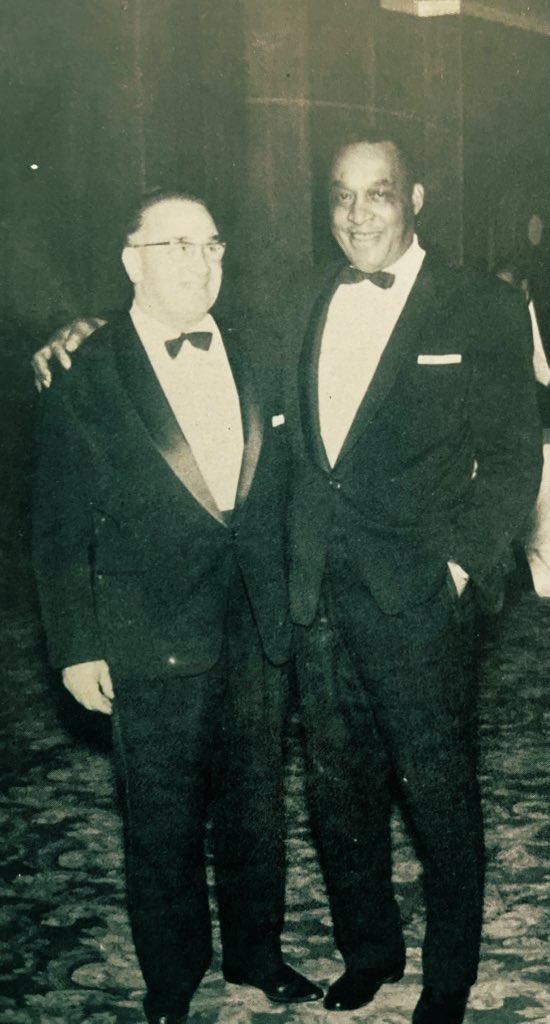
The 78-year-old Canadian, still upright, sharp-witted and looking ten years younger, is a walking advertisement for the sport of professional boxing”. In 1970, when the Jamaican middleweight Bunny Sterling became the first immigrant to win a British title, he and his manager, George Francis, had to contend with some vile racist abuse. Shortly after his victory Sterling was awarded with the Best Young Boxer award and as both he and Francis were to leave for Australia, they asked if Larry could collect the award on Sterling’s behalf. George Francis revealed why in saying “Larry was a great black fighter who had been denied the breaks that Bunny was now getting, so it seemed appropriate that he should represent Bunny”.
That a young Jamaican boxer, who wasn’t even born when Larry retired from the sport, should want to ask Gains to do this tells you everything about the respect and esteem that the whole sport felt for Larry. He was a revered figure, a trailblazer, a world-class heavyweight, a wonderful ambassador for the sport and, most of all, a gentleman of great dignity and it is fitting that the city of Leicester, his city, see it fit to not only remember him, but to honour him.
Credit Miles Templeton
